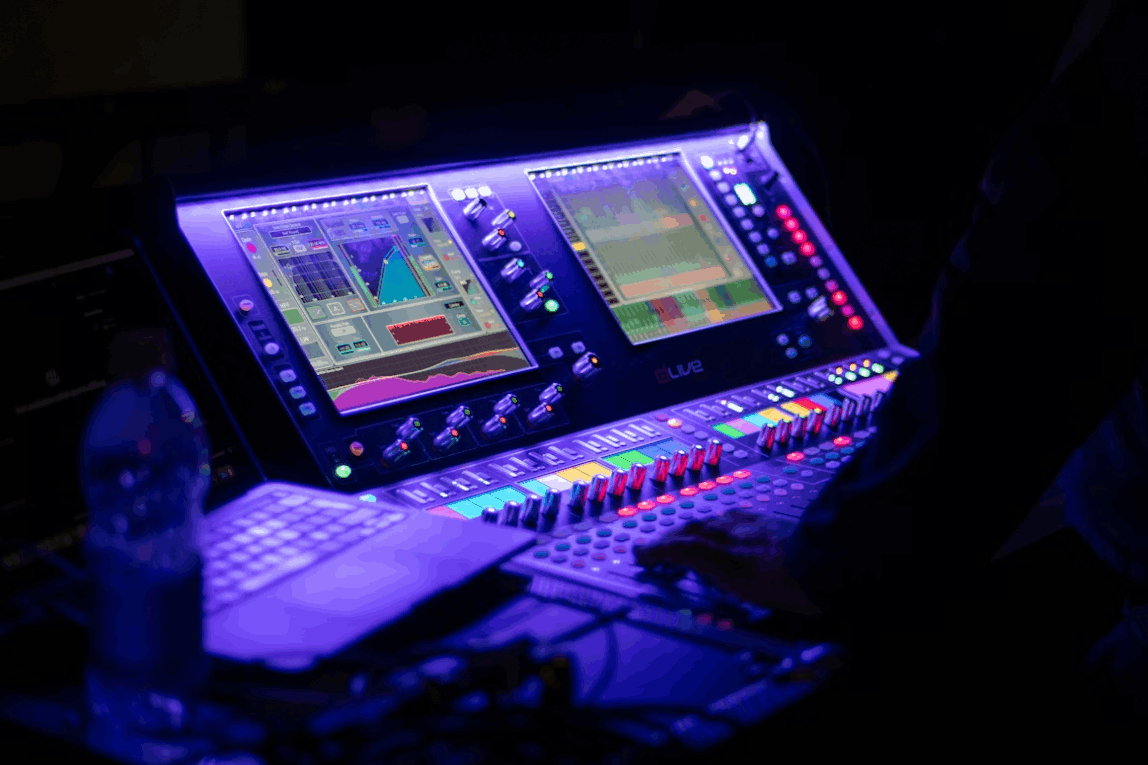
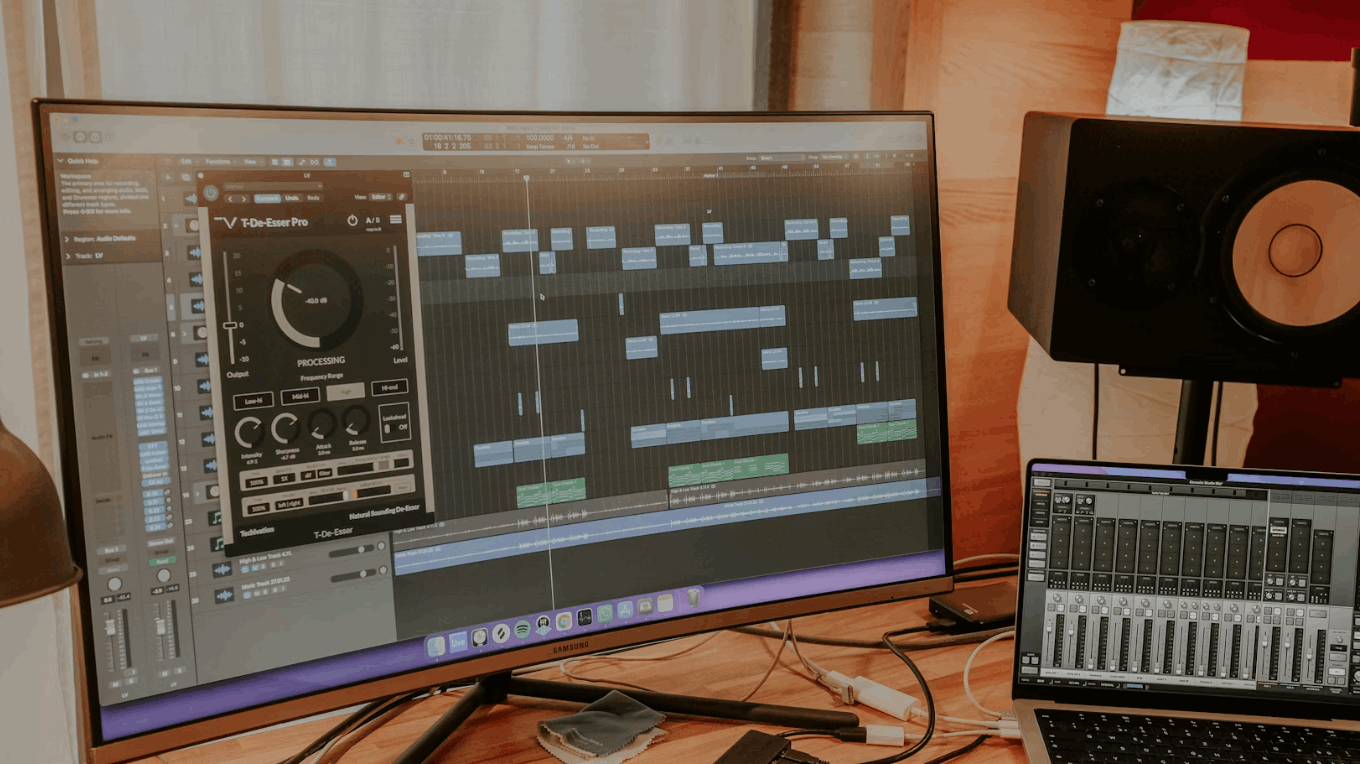
Shaping game worlds through audio experience

Exploring the science of sound and player immersion

We examine how audio influences perception in interactive entertainment. Our focus is on understanding the connection between sound design and emotional engagement. This exploration is for developers and enthusiasts who value the auditory dimension.

What We Do

Our work revolves around the analysis and conceptual design of game audio. We study existing titles to understand how different approaches to sound in games affect player behavior and emotional response. We create theoretical frameworks and audio prototypes that demonstrate the power of effective audio in video games.

We collaborate with development teams in the early stages, focusing on how sound and immersion in the game are interconnected. Our process involves mapping emotional arcs and gameplay mechanics to potential sonic landscapes. The goal is to ensure that every beep, melody, and ambient whisper serves a purpose, enhancing the atmosphere through sound and supporting the overall design vision.

About Us

Based in São Paulo, Sonic Canvas is a collective of audio designers, composers, and interactive media researchers. Our passion lies at the intersection of technology, art, and human perception, specifically within the realm of audio in video games. We believe Brazil's rich cultural soundscape offers a unique lens through which to examine and contribute to global game development.

Our team brings together diverse backgrounds in music production, acoustic engineering, and interactive design. We are fascinated by how sound and immersion in the game are inseparable, and we dedicate our work to exploring this complex relationship. From analyzing the soundtrack in games of major releases to prototyping new audio concepts, our goal is to deepen the understanding and application of sonic elements in digital experiences.


Blog

More Than Background Noise: Building Worlds with Audio

Atmosphere through sound begins long before a player encounters their first enemy or puzzle. It is established in the quiet moments, through the hum of machinery, the rustle of leaves, or the distant echo of a city. These layers of audio in video games construct a believable space that feels inhabited and dynamic. Careful sound design can suggest scale, history, and even narrative clues without explicit exposition. This sonic foundation is critical for making a digital environment feel tangible and worth exploring.

The Mobile Challenge: Designing Effective Sound for Small Speakers

Creating compelling sound effects in mobile games presents unique obstacles. Designers must consider playback on limited hardware, often in noisy or public environments. Clarity and immediacy become paramount, requiring sounds to be distinct and informative at low volumes. Strategic use of frequency ranges ensures critical cues cut through the mix. This focus on functional audio ensures gameplay remains intuitive, proving that sound in games is a vital usability feature, not just an artistic one.

From Tension to Triumph: How Music Guides the Player's Journey

The musical accompaniment of games operates on a psychological level, directly influencing the player's emotional state. A well-composed soundtrack in games can elevate a narrative moment, making a victory feel earned or a loss deeply personal. Music often works subconsciously, signaling shifts in gameplay intensity or impending danger. Its dynamic nature, adapting to player actions, creates a unique and responsive audio landscape. This synergy between action and score is a cornerstone of player engagement.

Creating an Audio Identity: Sounds That Players Remember

Iconic audio in video games transcends the play session and enters cultural memory. These sounds—a character's theme, a weapon's report, a menu selection—become auditory signatures. They strengthen player connection and foster a sense of familiarity and belonging within the game's universe. Developing this sonic identity requires consistency and thematic resonance across all sound in games. When done successfully, it ensures the experience is remembered not just visually, but acoustically.

Our Philosophy

We view sound in games not as a post-production polish, but as a foundational design element, as critical as graphics or mechanics. It is a primary channel for communication, emotion, and spatial awareness. Our philosophy holds that every sonic decision, from the smallest UI click to the grandest orchestral piece, must be intentional and serve the player's experience.

This belief drives us to prioritize atmosphere through sound and meaningful musical accompaniment of games. We advocate for audio to be integrated from a project's inception, allowing it to evolve alongside gameplay and narrative. By treating audio with this level of consideration, developers can craft more cohesive, immersive, and emotionally resonant worlds for players to inhabit.

FAQ 

Here are answers to some common questions we receive about the role and design of sound in interactive media. This section covers general topics related to audio in video games and its implementation.

Sound in games provides critical information that visuals alone cannot. It offers 360-degree spatial awareness, conveys emotion and tone through music, and delivers immediate feedback for player actions. This multi-sensory layer significantly deepens believability and engagement, making the world feel complete.

Designing sound effects in mobile games often prioritizes clarity and efficiency due to smaller speakers and varied playback environments. Audio must be optimized to deliver key information without overwhelming the mix. PC audio can leverage higher fidelity and more complex spatialization, but both require the same foundational principles of supporting gameplay and atmosphere through sound.

A soundtrack in games is an active narrative device. It guides the player's emotional journey, signaling story beats, escalating tension, or providing relief. Dynamic music that reacts to gameplay creates a more personalized and responsive experience, making the musical accompaniment of games a direct partner to the action on screen.

Absolutely. Precise and responsive audio in video games provides tactile feedback, making actions feel more impactful and satisfying. It reduces cognitive load by conveying information through sound, allowing for more intuitive play. This directly enhances the feeling of control and connection, which is central to sound and immersion in the game.

An audio identity is a cohesive set of sonic characteristics—like specific instrument palettes, sound effect styles, or melodic motifs—that become uniquely associated with a game. It ensures all sound in games feels like part of the same universe. This consistency strengthens the game's brand and makes the audio experience memorable and distinctive.

Get in Touch

Contacts

© Sonic Canvas 2026 - All Rights Reserved
Cookie Privacy | Privacy Policy